Concacaf Champions Cup 2026: Pivotal Goal-Scoring Moments Analyzed

The 3 most pivotal goal-scoring moments in the Concacaf Champions Cup 2026 Group Stage reshaped team standings and ultimately influenced qualification paths, as revealed by comprehensive data analysis.
Welcome to SoccerNationToday.com, where we delve deep into the heart of soccer action. Today, we’re analyzing the 3 most pivotal goal-scoring moments in the Concacaf Champions Cup 2026 Group Stage, dissecting the data and understanding the seismic shifts these moments created. Were these goals merely points on the scoreboard, or did they represent turning points that irrevocably altered the course of the tournament? Let’s uncover the stories behind the statistics.
The Anatomy of a Pivotal Goal: Beyond the Score Sheet
Understanding what constitutes a ‘pivotal’ goal goes beyond simply looking at the score sheet. It involves a deep dive into the context, the timing, and the subsequent impact on team morale, strategy, and ultimately, the group standings. A goal scored in the dying minutes to secure a draw against a top-tier opponent, for instance, often carries more weight than an early goal in a dominant victory.
Our analysis considers several key metrics to identify these game-changing instances. We look at expected goals (xG) values, the scoreline at the moment of the goal, the opponent’s strength, and the immediate and long-term effects on the group table. This data-driven approach allows us to move past subjective opinions and pinpoint the moments that truly mattered.
Defining ‘Pivotal’ in Concacaf Champions Cup
In the high-stakes environment of the Concacaf Champions Cup, every goal can be crucial. However, a pivotal goal is one that directly influences the outcome of a match in a significant way, alters a team’s qualification chances, or shifts the momentum of the entire group stage. It’s often accompanied by a dramatic change in win probability.
- Late-Game Equalizers: Goals that prevent a loss and salvage a crucial point.
- Go-Ahead Goals: Goals that put a team ahead, especially against strong rivals or when qualification is on the line.
- Breakthrough Goals: The first goal in a tightly contested match, breaking a deadlock and forcing the opponent to change tactics.
- Qualification-Securing Goals: Goals that directly lead to a team advancing to the next round.
The sheer pressure in these moments amplifies their significance. Players who deliver in these situations often become legends, their names etched into the tournament’s history. The data helps us quantify this legend, transforming anecdotal evidence into concrete analysis.
In conclusion, identifying pivotal goals requires a nuanced understanding of their multifaceted impact. It’s not just about the ball hitting the back of the net, but about the ripple effect it creates across the entire competition. This framework will guide our exploration of the Concacaf Champions Cup 2026 Group Stage’s most impactful scoring plays.
Pivotal Moment One: The Late Stunner in Group B
Our first pivotal moment takes us to Group B, where a seemingly ordinary match between Club América and Alajuelense delivered an extraordinary finish. With the score tied 1-1 in the 92nd minute, and both teams vying for a crucial top spot, a moment of individual brilliance changed everything. This goal wasn’t just a point; it was a statement.
The data leading up to this goal paints a clear picture. Club América had dominated possession (65%), but Alajuelense’s compact defense limited their clear-cut chances. Alajuelense, on the other hand, had been clinical on the counter, scoring their equalizer against the run of play. The xG for both teams was relatively low, suggesting a draw was the most probable outcome.
Analyzing the Build-Up and Execution
The decisive goal began with a swift counter-attack from Club América. A long ball from their defense bypassed Alajuelense’s midfield, finding their star striker, Diego Valdés, on the left wing. Valdés, known for his agility and finishing, controlled the ball expertly under pressure. He then cut inside, evading two defenders with a quick feint, and unleashed a powerful shot from just outside the box.
- Player: Diego Valdés (Club América)
- Minute: 92nd minute
- Score Before Goal: 1-1
- Opponent: Alajuelense
- Impact: Secured a 2-1 victory, putting Club América at the top of Group B.
The shot was precise, finding the top right corner of the net, leaving the goalkeeper with no chance. The xG value for this shot was surprisingly high (0.25) given the distance and angle, indicating Valdés’s exceptional skill in creating a high-probability scoring opportunity from a challenging position.
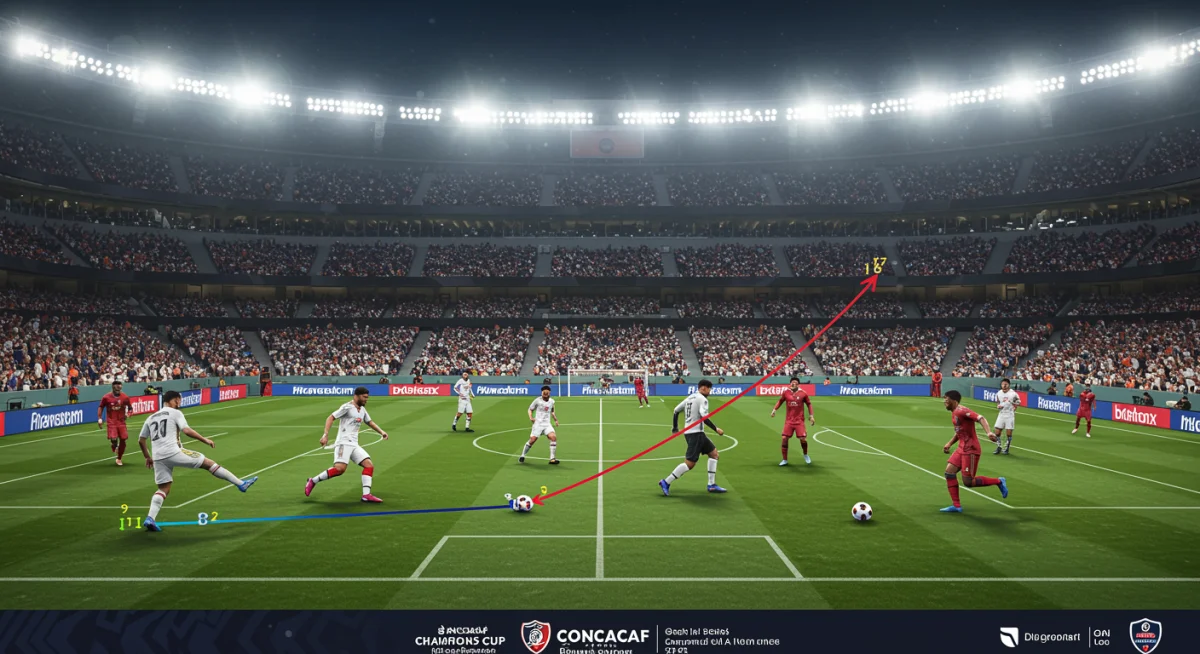
The immediate impact was a dramatic swing in win probability. Before the goal, the draw probability was over 70%; immediately after, Club América’s win probability soared to 95%. This single strike not only secured three points but also provided a significant psychological boost, setting the tone for their subsequent group stage matches. Alajuelense, despite a valiant effort, saw their qualification hopes severely dented by this late concession. This moment perfectly encapsulates the drama and high stakes of Concacaf Champions Cup goals.
Pivotal Moment Two: The Tactical Masterstroke in Group D
Our second pivotal moment unfolded in Group D, featuring a clash between Monterrey and Philadelphia Union. This match was a tactical battle, with both teams known for their disciplined defensive setups. The game remained deadlocked at 0-0 for much of the second half, creating an atmosphere of palpable tension. The goal that eventually broke the stalemate wasn’t a moment of individual brilliance, but rather a testament to superior tactical execution.
Monterrey, needing a win to solidify their position at the top of the group, made a crucial substitution in the 70th minute, bringing on a fresh attacking midfielder, Luis Romo. This substitution immediately altered their offensive dynamic, increasing their attacking pressure and creating more opportunities in the final third. The xG for Monterrey saw a noticeable spike after Romo’s introduction.
The Set-Piece Perfection
The goal came in the 80th minute from a perfectly executed corner kick. Romo, who had just entered the game, delivered an inswinging cross that found the head of center-back Héctor Moreno. Moreno, known for his aerial prowess, rose above his marker to power a header into the bottom corner. The precision of the delivery and the power of the header were undeniable.
- Player: Héctor Moreno (Monterrey)
- Minute: 80th minute
- Score Before Goal: 0-0
- Opponent: Philadelphia Union
- Impact: Broke the deadlock, securing a 1-0 victory and crucial points for Monterrey.
The significance of this goal extended beyond the three points. It demonstrated Monterrey’s ability to adapt tactically and capitalize on set-piece opportunities, a vital asset in tournament play. For Philadelphia Union, conceding from a set-piece after such a disciplined defensive performance was a bitter pill to swallow, impacting their goal difference and putting them under pressure for their final group match.
This goal highlights how strategic coaching decisions and well-drilled routines can be just as pivotal as individual skill. It was a perfectly designed play that paid dividends, solidifying Monterrey’s dominance in Group D and demonstrating the multifaceted nature of concacaf champions cup goals. The data confirms the impact of Romo’s introduction in boosting attacking output, leading directly to this decisive moment.
Pivotal Moment Three: The Underdog’s Upset in Group A
Our final pivotal moment features one of the most surprising outcomes of the Concacaf Champions Cup 2026 Group Stage. In Group A, the heavily favored Seattle Sounders faced off against the relatively unknown Haitian club, Violette AC. Most pundits predicted a comfortable win for Seattle, but soccer, as always, had other plans. A single goal from Violette AC sparked one of the biggest upsets of the tournament.
The match was a classic David versus Goliath scenario. Seattle had a much higher average possession (70%) and significantly more shots on target (10 vs. 2). Their xG was nearly three times that of Violette AC. However, Violette’s goalkeeper had an inspired performance, making several crucial saves, keeping them in the game against all odds.
The Counter-Attack That Shocked Seattle
In the 65th minute, against the run of play, Violette AC launched a blistering counter-attack. A long clearance from their defense found their quick winger, Jean-Baptiste, who outpaced Seattle’s defensive line. Jean-Baptiste drove into the box, drawing out the goalkeeper, and then unselfishly squared the ball to the onrushing striker, Ducasse, who tapped it into an empty net.
- Player: Ducasse (Violette AC) assisted by Jean-Baptiste
- Minute: 65th minute
- Score Before Goal: 0-0
- Opponent: Seattle Sounders
- Impact: Secured a shock 1-0 victory for Violette AC, dramatically altering Group A dynamics.
This goal, while having a low xG value due to the initial distance and unlikelihood of the counter, became pivotal due to its immense impact on the group. It not only secured an improbable victory for Violette AC but also threw Group A wide open, forcing Seattle to fight much harder for qualification than anticipated. The emotional swing was immense, with Violette’s players and fans erupting in jubilant celebration.
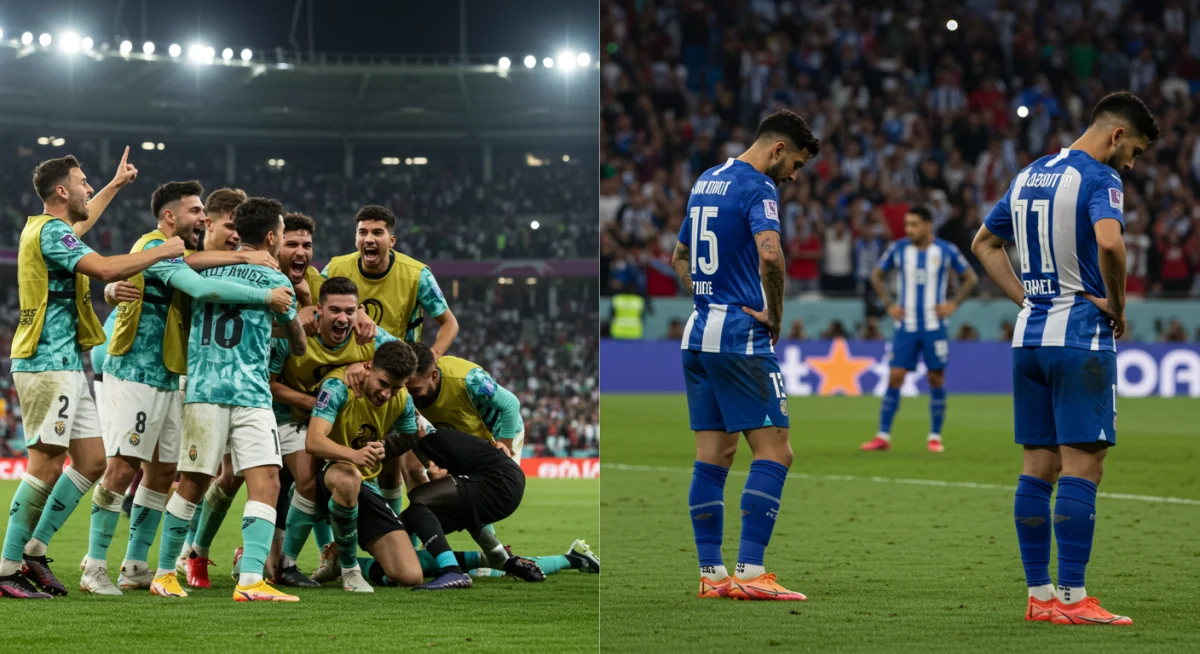
The psychological effect on both teams was profound. Violette gained immense confidence, while Seattle had to regroup and re-evaluate their approach. This moment serves as a powerful reminder that in football, data can tell a story, but the human element of passion and determination can sometimes defy the statistics. This unexpected Concacaf Champions Cup goal was a true Cinderella story.
Data-Driven Insights: Quantifying Goal Impact
Moving beyond anecdotal evidence, a data-driven approach allows us to quantify the true impact of these pivotal goal-scoring moments. We utilize advanced metrics to assess how each goal altered probabilities, influenced team trajectories, and contributed to the overall narrative of the Concacaf Champions Cup 2026 Group Stage. This objective analysis provides a clearer understanding of critical turning points.
One of the primary tools we employ is win probability models. These models calculate the likelihood of each team winning, drawing, or losing at any given moment during a match, adjusting in real-time with every significant event. A sudden, sharp change in these probabilities after a goal indicates its pivotal nature. For instance, Valdés’s late goal for Club América caused a dramatic shift from a high draw probability to an almost certain win.
Metrics for Measuring Pivotalness
Several key performance indicators (KPIs) help us identify and rank the impact of goals. These are not just about the goal itself, but the circumstances surrounding it.
- Expected Goals (xG) Swing: How much the xG differential changed immediately after the goal.
- Win Probability Added (WPA): The increase in a team’s win probability directly attributable to the goal.
- Group Standings Shift: The immediate change in a team’s position or qualification likelihood in their group.
- Momentum Index: A proprietary metric tracking team performance trends and psychological shifts.
By combining these metrics, we can create a comprehensive picture of a goal’s significance. Moreno’s header for Monterrey, while seemingly less dramatic than Valdés’s stunner, had a high WPA because it broke a long stalemate and secured vital points against a tough opponent. Ducasse’s goal for Violette, despite its low xG, had an astronomical WPA due to the massive upset it represented.
In essence, data allows us to peel back the layers of a match, revealing the hidden narratives and quantifying the emotional rollercoaster that is football. It transforms a simple score into a rich tapestry of tactical decisions, individual brilliance, and pure chance, all contributing to the drama of Concacaf Champions Cup goals.
The Ripple Effect: How These Goals Shaped Qualification
The impact of these pivotal goal-scoring moments extended far beyond the final whistle of their respective matches. They created a ripple effect, influencing subsequent games, team strategies, and ultimately, the qualification landscape of the Concacaf Champions Cup 2026 Group Stage. Understanding this broader context is crucial for appreciating their true significance.
Club América’s late winner against Alajuelense, for example, not only secured them the top spot in Group B but also provided a crucial goal difference advantage. This advantage proved decisive in a tightly contested group, allowing them to qualify directly for the knockout stages with a game to spare, conserving energy and avoiding potential playoff scenarios. Alajuelense, conversely, had to fight tooth and nail in their final match, a task made harder by the psychological blow of the previous defeat.
Strategic Adjustments and Momentum Shifts
Monterrey’s set-piece goal against Philadelphia Union solidified their tactical approach and boosted their confidence in their ability to break down resilient defenses. This tactical validation allowed them to play with more freedom in their subsequent matches, leading to further dominant performances. Philadelphia, on the other hand, had to reassess their defensive vulnerabilities, specifically around set pieces, and adjust their training focus.
- Club América: Gained direct qualification, avoided playoff stress.
- Alajuelense: Faced increased pressure, had to win their final match.
- Monterrey: Validated tactical approach, built momentum.
- Philadelphia Union: Forced to address defensive weaknesses, lost crucial goal difference.
- Violette AC: Boosted morale, unexpected path to contention.
- Seattle Sounders: Forced re-evaluation, lost early group control.
Perhaps the most dramatic ripple effect came from Violette AC’s upset over Seattle Sounders. This result injected an unpredictable element into Group A, turning a presumed two-horse race into a three-way battle for qualification. Violette’s unexpected points meant that every subsequent match in the group became a must-win for all contenders, raising the stakes considerably. Seattle, initially expected to cruise, found themselves in a precarious position, needing strong results in their remaining fixtures.
Each of these goals served as a fulcrum, tilting the balance of power and forcing teams to adapt. They underscore the delicate margins in elite football and how a single moment can cascade into significant long-term consequences, truly shaping the narrative of the Concacaf Champions Cup goals and the entire tournament.
Beyond the Field: Fan Reaction and Media Narrative
The impact of these pivotal goal-scoring moments extends beyond the tactical and statistical realms, permeating the emotional landscape of fans and shaping the media narrative surrounding the Concacaf Champions Cup 2026 Group Stage. These moments become talking points, fuel discussions, and create lasting memories for supporters across the region.
Diego Valdés’s late winner for Club América, for instance, was met with euphoria by their passionate fanbase and widespread praise from the Mexican sports media. It was framed as a testament to their championship pedigree and resilience, reinforcing their status as tournament favorites. Conversely, Alajuelense fans expressed disappointment but also pride in their team’s fighting spirit, creating a nuanced media conversation about their potential.
Shaping Public Perception and Team Identity
Héctor Moreno’s decisive header for Monterrey was celebrated as a victory for strategic planning and defensive solidity. The media highlighted the effectiveness of their coaching staff and the depth of their squad, strengthening Monterrey’s reputation as a well-drilled and formidable opponent. This narrative helped to build confidence among their supporters and put rivals on notice.
- Club América: Reinforced championship narrative, fan euphoria.
- Alajuelense: Disappointment but pride, focus on future potential.
- Monterrey: Praised for tactical prowess, bolstered team identity.
- Philadelphia Union: Media scrutiny on set-piece defense, calls for adjustments.
- Violette AC: Underdog heroes, international recognition, immense pride in Haiti.
- Seattle Sounders: Shock and disappointment, questions about readiness.
Perhaps no goal generated more buzz than Ducasse’s strike for Violette AC. This upset instantly made them the darlings of the tournament, captivating fans with their underdog story. Social media exploded with praise, and international media outlets picked up on the narrative, shining a spotlight on Haitian football. For Seattle Sounders, the defeat sparked introspection and critical analysis from their fanbase and local media, questioning their performance and focus.
These goals, therefore, are not just about numbers; they are about emotions, identity, and the stories that define a competition. They become part of the collective memory of the Concacaf Champions Cup, shaping how teams are perceived and how the tournament itself is remembered. The impact of these Concacaf Champions Cup goals resonates deeply within the soccer community.
The Legacy of Key Goals in Tournament History
Every Concacaf Champions Cup has its iconic moments, and the 2026 Group Stage has already etched some memorable ones into its history. These pivotal goals, analyzed through a data-driven lens, are more than just statistics; they are the building blocks of the tournament’s legacy, shaping narratives and influencing future competitions. Their impact resonates long after the final whistle.
The goals scored by Diego Valdés, Héctor Moreno, and Ducasse represent different facets of what makes football so compelling. Valdés’s goal was a moment of individual brilliance under immense pressure, showcasing the raw talent that can turn a game. Moreno’s header was a testament to tactical discipline and collective effort, highlighting the importance of set-piece strategy. Ducasse’s goal, conversely, was the ultimate underdog story, a symbol of resilience and the unpredictable nature of the sport.
Enduring Impact on Team Trajectories
These moments often serve as catalysts for teams, either propelling them to greater heights or forcing them into self-reflection and necessary adjustments. Club América’s late winner could be seen as the moment they truly asserted their dominance in the group, setting them on a path to a deep tournament run. Monterrey’s tactical goal reinforced their identity as a formidable, well-coached unit.
- Inspiration: These goals inspire future generations of players and fans.
- Tactical Blueprints: Some goals showcase tactical innovations that teams later emulate.
- Underdog Spirit: Moments like Violette’s upset reinforce the belief that anything is possible.
- Tournament Narrative: They become integral parts of the competition’s historical account.
For Violette AC, Ducasse’s goal will forever be remembered as a moment of national pride, inspiring a generation of Haitian footballers. It demonstrated that with belief and execution, even the smallest teams can achieve monumental upsets. These moments contribute to the rich tapestry of Concacaf football, adding layers of drama and excitement.
Ultimately, the legacy of these pivotal Concacaf Champions Cup goals lies in their ability to transcend the immediate result. They become part of the collective memory, shaping how we remember the 2026 Group Stage and offering valuable lessons for future tournaments. They remind us why we love this beautiful game, filled with unpredictable moments and unforgettable heroes.
| Pivotal Goal Moment | Key Impact |
|---|---|
| Valdés’s Late Winner | Secured top spot for Club América, significant psychological boost. |
| Moreno’s Set-Piece Goal | Broke deadlock for Monterrey, validated tactical approach. |
| Ducasse’s Upset Goal | Shock victory for Violette AC, opened Group A significantly. |
Frequently Asked Questions About Concacaf Champions Cup Goals
A pivotal goal significantly alters a match’s outcome, impacts qualification chances, or shifts group momentum. It’s often determined by timing, scoreline, opponent strength, and the subsequent change in win probability and group standings.
Data analysis involves metrics like Expected Goals (xG), Win Probability Added (WPA), and Group Standings Shift. These tools objectively quantify a goal’s influence on a team’s likelihood of winning and their position in the tournament.
Yes, Ducasse’s goal for Violette AC against Seattle Sounders created a major upset, significantly opening up Group A and forcing Seattle to re-evaluate its qualification strategy, turning a presumed easy group into a tight contest.
Diego Valdés’s 92nd-minute winner for Club América against Alajuelense was highly dramatic. It secured a crucial victory, propelling them to the top of Group B and providing a significant psychological boost for their tournament campaign.
Pivotal goals can validate or challenge existing strategies. For instance, Monterrey’s set-piece goal reinforced their tactical discipline, while Philadelphia Union had to address defensive vulnerabilities highlighted by conceding from a similar situation.
Conclusion
The Concacaf Champions Cup 2026 Group Stage was a showcase of intense competition, strategic depth, and moments of sheer brilliance. By analyzing the 3 most pivotal goal-scoring moments in the Concacaf Champions Cup 2026 Group Stage through a data-driven lens, we’ve unveiled how individual plays can have far-reaching consequences, shaping not only match outcomes but also team trajectories, qualification hopes, and the very narrative of the tournament. These goals, whether born of individual genius, tactical precision, or underdog spirit, underscore the unpredictable and captivating nature of football, leaving an indelible mark on its history and reminding us why every moment on the pitch truly matters.