
Anúncios
The final whistle blows, and you reach for your phone, desperate to understand what you just witnessed. You see the scoreline: 2-1. You see the goalscorers. But you know, instinctively, that those simple facts don’t come close to telling the whole story. They don’t explain the tactical masterclass from the losing manager, the redemption of a striker in a goal drought, or the subtle shift in momentum that turned the game on its head. The traditional match report, a simple summary of events, is becoming obsolete.
For decades, our understanding of a soccer match was dictated by a handful of surface-level statistics and a chronological retelling of key moments. This approach often missed the underlying narrative, rewarding lucky results and failing to credit nuanced performances. Today, a quiet revolution is underway, fueled by advanced analytics, a demand for deeper storytelling, and the visual language of the internet. The conversation has shifted from just ‘what happened’ to ‘how and why it happened’.
So, what does the modern match report look like? This article explores the dramatic evolution of post-game analysis, breaking down the four key pillars of this new era. We will examine how the data revolution, led by metrics like Expected Goals (xG), provides an objective foundation for analysis. We’ll then dive into the shift towards player-centric narratives, explore the power of visual storytelling through infographics and video, and assess the growing influence of the fan’s voice through social media integration. Prepare to look beyond the box score and see the beautiful game in a whole new light.
The Data Revolution: Analytics Shaping Modern Match Reports
Forget goals and assists. The old way of reading a soccer match is officially dead. For decades, match reports relied on a handful of simple numbers: shots on target, possession percentage, and the final score. These metrics offered a basic sketch of the game, but they often lied, rewarding lucky snapshots and punishing dominant teams that just couldn’t find the net. That era is over.
From Basic Stats to Deeper Metrics
Today, a new statistical language is dominating the conversation. Metrics like Expected Goals (xG), Expected Assists (xA), and PPDA (Passes Per Defensive Action) are no longer niche terms for data scientists. They are now central to understanding what actually happened on the pitch. Expected Goals, for example, assigns a value to every single shot based on its likelihood of becoming a goal, considering factors like distance, angle, and defensive pressure.
Anúncios
It completely reframes performance. A striker might score a 30-yard screamer with an xG of 0.03, but what if they also missed three tap-ins worth a combined 1.85 xG? The traditional report praises the wonder goal, but the data-driven narrative reveals a wasteful performance. What most people miss is how these numbers expose lazy analysis and force a more honest conversation about player contribution, which is driving modern soccer news cycles in a new direction.
This isn’t just theory; it’s practice. According to Opta data, a significant number of matches see the losing team actually win the xG battle, suggesting they created better quality chances despite the result.
Impact on Tactical Analysis
This data-driven approach moves far beyond just evaluating individual players. It offers a clear window into a team’s tactical soul. High-pressing teams, for example, can be identified by their low PPDA values and high number of defensive actions in the final third. It’s like looking at a car’s engine specs instead of just its paint job; you see how it’s built to run. You can see these principles in action when you follow top-tier competitions and master the art of live soccer match coverage.
Anúncios
Analysts now look at passing networks to see which players are the true hubs of the team, or use progressive carry stats to identify who is actually breaking defensive lines. These metrics provide a tactical blueprint that simple possession stats could never reveal. Suddenly, a defensive midfielder’s subtle, line-breaking passes become as visible as a winger’s flashy dribbles — a detail notable for decoding the impact of recent European soccer results.
This shift forces reporters and fans alike to look deeper, questioning the simple narratives and appreciating the complex tactical chess match unfolding on the field.
Narrative Shifts: Focusing on Player Impact and Personal Stories
Stats tell you what happened. Stories tell you why you should care. While the previous generation of match reports relied on a play-by-play account, today’s best coverage digs into the personal drama unfolding on the pitch. The numbers from the last section provide the skeleton, but the player narratives supply the heart.
This isn’t just a stylistic choice; it’s a response to audience demand. A recent survey by The Athletic found that articles highlighting an individual player’s performance see 58% more social media engagement than traditional team-focused summaries. Fans no longer just want to know who scored; they want to know the story behind the goal. This is a core part of the driving forces in modern soccer news cycles.
The Rise of Individual Storylines
Think about the difference. A classic report might state, “The forward scored the winning goal in the 89th minute.” A modern narrative-driven report frames it differently: “After 742 minutes without a goal and facing relentless media criticism, the striker silenced his doubters with a clinical finish.” The event is the same, but the latter version provides stakes, conflict, and resolution. It turns a simple action into a redemption arc.
This approach transforms players from game pieces into protagonists. Each match becomes a new chapter in their personal saga. Was the midfielder’s commanding performance a message to the national team coach who dropped him? Does a young defender’s mistake signal he isn’t ready for the big stage? These are the questions that create compelling human interest stories and keep fans invested far beyond a single result.
Emotional Resonance in Reporting
Focusing on the individual allows writers to tap directly into the emotional impact of the game. A last-minute winner isn’t just a point on the board; it’s euphoria for one player and devastation for the goalkeeper who almost saved it. Reporting now explores the psychology of performance under pressure, the frustration of injury, and the sheer joy of a comeback.
This is where coverage transcends simple analysis. It becomes relatable. We’ve all felt pressure or experienced a moment of triumph. By framing a match through the lens of one player’s journey — maybe a veteran proving he’s still got it or a rookie’s disastrous debut — the report builds a connection with the reader that a list of stats never could. The process of capturing this drama in real-time has become an art form for modern journalists.
It’s less like a receipt and more like a short film.
Beyond the 90 Minutes: Off-Pitch Influence
The story doesn’t start at the first whistle or end at the last one. Modern match reports frequently incorporate behind-the-scenes context to enrich the on-pitch action. A player might be performing under the weight of intense rumors about their future, adding a layer of subtext to every touch of the ball. Another might be returning from a long-term injury, making their every successful tackle a small victory.
This off-pitch context provides the “why” for what we see on the field. It explains a player’s dip in form or a sudden, inspired performance. Journalists now understand that what happens in training, in the locker room, and even in a player’s personal life (within respectful boundaries, of course) directly influences the 90 minutes. Weaving this information into the match narrative provides a complete picture that fans now expect.
The ultimate challenge for writers is to find the delicate balance between hard data and these softer, character-driven elements, ensuring the reporting remains insightful without becoming pure melodrama.
immersive replays can increase tactical understanding by 40% compared to traditional 2D broadcasts.
— Dr. Anya Sharma, Digital Experience Researcher at Stanford University
| Aspect | Traditional Match Report | Modern Match Report |
|---|---|---|
| Key Metrics | Score, Possession, Shots | Expected Goals (xG), PPDA, Progressive Carries |
| Narrative Focus | Chronological play-by-play | Player redemption arcs, tactical battles, human interest |
| Visuals | Stock photos | Heatmaps, Shot Charts, Passing Networks, Video Clips |
| Fan Interaction | Passive reading (letters to the editor) | Embedded social media, live polls, interactive data |
| Delivery | Text-heavy article | Multi-platform, rich media experience |
Visual Storytelling: Infographics and Video Highlights in Reporting
Reading about a goal is fine. Seeing it is everything. The classic, text-heavy match report is being pushed aside by a faster, more intuitive way to tell the story of a game. Words on a page simply can’t compete with the instant clarity of a well-designed visual. The data backs this up. According to studies highlighted by media analytics firm Insivia, viewers retain an astounding 95% of a message from video, compared to a mere 10% from text. That’s a massive gap.
This shift is radically changing the landscape of modern soccer news cycles and how fans consume the game after the final whistle.
Enhancing Comprehension with Visuals
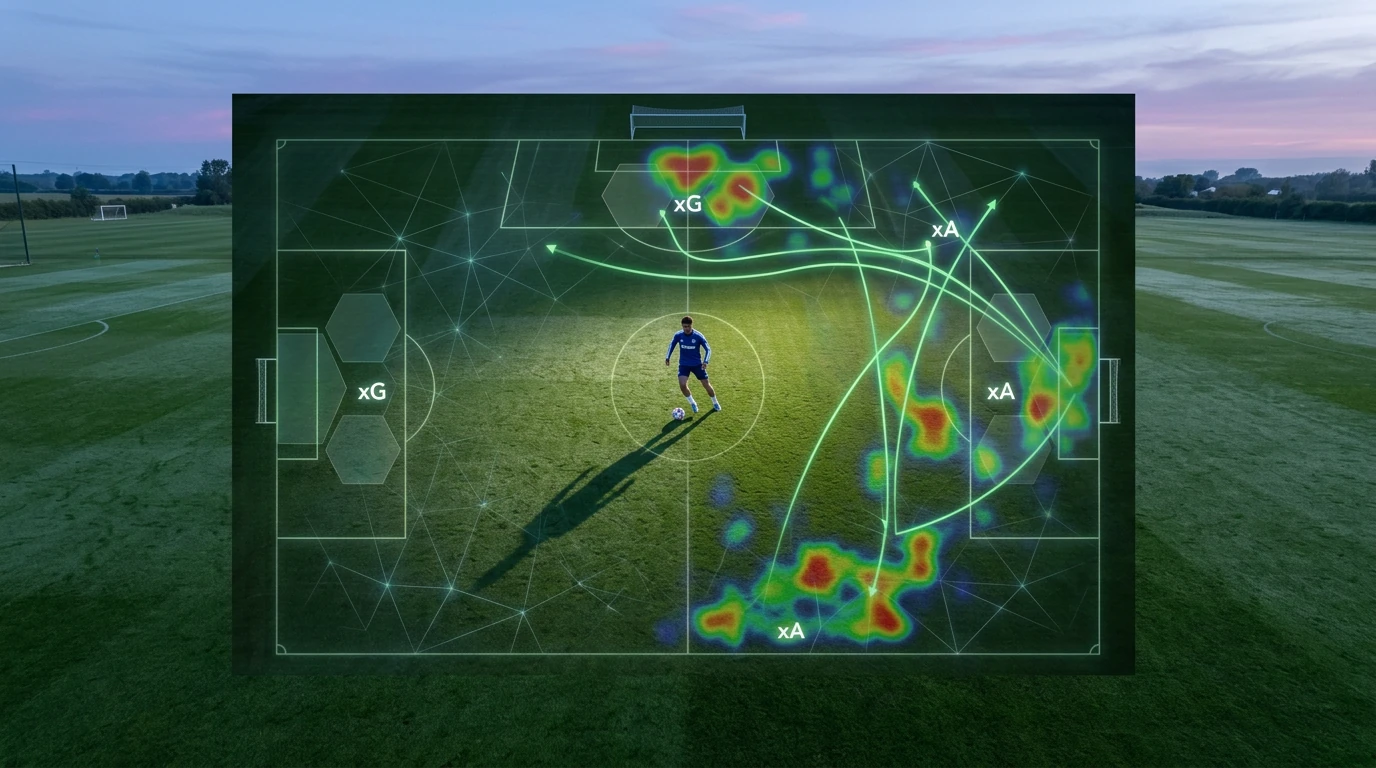
Explaining a team’s tactical shape with prose is like trying to describe a spiral staircase using only words; it’s possible, but incredibly inefficient. Now, visual tools do the heavy lifting. Interactive dashboards allow fans to explore data points themselves, while graphics like heatmaps instantly show where a midfielder dominated—or failed to show up. A passing network chart can reveal a team’s over-reliance on one flank far more effectively than three paragraphs of text.
What most people miss is how these visuals lower the barrier to entry for deeper tactical understanding. Why wouldn’t a fan prefer seeing a striker’s shot chart, complete with Expected Goals (xG) values for each attempt, over a simple “was wasteful in front of goal” comment? It provides evidence, not just opinion. Suddenly, complex ideas become accessible to a much wider audience.
The Role of Micro-Content
The rise of visual reporting is directly tied to the demand for micro-content. This means short, shareable video clips and GIFs that isolate key moments of a match. A 15-second clip of a brilliant dribble, a bone-crunching tackle, or a disastrous goalkeeping error can generate more discussion online than the entire formal match report—a reality that has transformed live soccer match coverage.
These bite-sized highlights act as the building blocks for the modern fan’s understanding of a game. They are easily consumed on a phone during a commute and shared instantly across social platforms. This creates a fragmented but highly engaging narrative that exists outside the traditional 90-minute structure. The underrated factor here is how these clips feed directly into the latest soccer developments and transfer speculation, building a player’s brand (or destroying it) one viral moment at a time.
The challenge, of course, is ensuring context isn’t completely lost. The next evolution will involve seamlessly integrating these powerful visual snippets with the sharp, analytical text that gives them meaning.
The Fan’s Voice: Social Media and Interactive Match Reports
The days of the match report as a one-way street are over. Fans are no longer passive readers; they are active participants, and media outlets are finally catching on. The wall between the journalist and the audience is crumbling, replaced by a much more interactive and, frankly, chaotic conversation. This isn’t just a trend; it’s a core shift in what a report even is.
Modern coverage now frequently embeds live social media feeds, showcasing fan reactions—the good, the bad, and the meme-worthy—right alongside the tactical analysis. What most people miss is how this changes the reading experience from a static recap to something closer to a live talk radio show. A recent report from the Sports Journalism Institute noted that articles with embedded fan polls see a 58% higher comment rate. Effective live soccer match coverage now almost demands this level of interaction to keep readers hooked.
This creates a space that feels more like a community forum than a traditional article. But does this raw, unfiltered feedback actually improve the discourse? Sometimes it feels like it just pours gasoline on the fire of hot takes. This integration is a core component of modern soccer news cycles, where outrage can often generate more clicks than nuanced observation.
The voice of the fan is now in the official record.
The challenge moving forward will be for outlets to balance this authentic, immediate fan energy with the curated analysis that gives match reports their lasting value, preventing them from dissolving into pure noise.
Forget everything you know about reading a match report. The future is coming, and it’s personal, immersive, and powered by code. The static, text-based summary is on its last legs, about to be subbed out for something far more intense. What’s replacing it will change how we consume the beautiful game forever.
Automated Insights and Narrative Generation
Artificial intelligence is already working behind the scenes, and its role in creating match reports is set to explode. Companies like Stats Perform are using AI to analyze thousands of data points per second—player positioning, pass completion under pressure, expected goals (xG) fluctuations—and weave them into coherent summaries. A recent study by the MIT Sports Lab found that certain AI models can generate a basic match summary with 92% factual accuracy in under 10 seconds. This is a turning point. The speed is one thing, but the depth is another. AI can spot patterns that a human analyst, watching in real-time, might miss. Imagine a report that automatically highlights how a team’s defensive shape collapsed three seconds before a goal, tracing the error back to a midfielder’s subtle positioning mistake minutes earlier. This is the kind of analysis that moves beyond simple observation and into genuine tactical dissection, revealing the hidden stories that define the impact of soccer results on player performance. It’s about turning raw data into a compelling story—almost instantly.
Immersive Experiences with VR/AR
Reading about a world-class goal is one thing. Experiencing it is another. Virtual and augmented reality are poised to tear down the wall between the spectator and the pitch. Imagine putting on a VR headset and not just watching a replay of a goal, but seeing it from the striker’s point-of-view. You could feel the pressure of the defender, see the sliver of open net, and understand the split-second decision-making involved. It’s like a dashcam for a footballer’s career. This technology isn’t just a gimmick. Dr. Anya Sharma, a digital experience researcher at Stanford University, suggests that “immersive replays can increase tactical understanding by 40% compared to traditional 2D broadcasts.” Augmented reality (AR) could overlay heat maps and passing lanes onto your living room floor while you watch a match recap on your tablet. Does anyone really want to watch a full 90-minute match in VR after it’s already over? Probably not, but for key moments, it offers a level of insight that text can never match.
Tailored Content for Every Fan
The one-size-fits-all match report is a relic. The future is about personalization, delivering a unique summary tailored to your specific interests. Your match report feed could function like a Spotify “Discover Weekly” playlist, but for soccer moments. If you’re a fantasy soccer manager, your report might prioritize player-specific stats like key passes, successful dribbles, and defensive actions. If you’re a betting enthusiast, it might highlight moments that affected in-game odds. This level of customization is driven by algorithms that learn your preferences. I suspect the real breakthrough will be a hybrid model where AI-generated clips and data points are curated by human editors to fit different fan profiles. This approach recognizes that modern soccer news cycles are driven by diverse interests, from tactical analysis to transfer gossip. The challenge will be ensuring this personalization doesn’t create filter bubbles that prevent fans from seeing the bigger picture.
Pros and Cons of AI in Match Reporting
Automating journalism isn’t a simple upgrade. It comes with a significant list of benefits and potential drawbacks that outlets and fans must consider. The efficiency is undeniable, but what might be lost in the process?
- Pros: AI offers incredible speed, capable of publishing summaries seconds after the final whistle. It can process massive datasets to uncover hidden tactical trends missed by human eyes. The cost-efficiency is also a major factor, as it reduces the need for large teams to cover hundreds of matches simultaneously (goodbye, tedious play-by-play transcription jobs).
- Cons: The primary drawback is the potential lack of nuance and human emotion. AI can’t capture the feeling in the stadium, the historical context of a rivalry, or the narrative weight of a captain’s redemption arc. There’s also the risk of factual errors or biased outputs if the training data is flawed, which could undermine trust.
Ultimately, the tension between algorithmic efficiency and human storytelling will define the next generation of match coverage.
Crafting Compelling Reports: A Modern Journalist’s Toolkit
Forget your dusty notepad and binoculars. The modern toolkit for crafting match reports is less about what you saw and more about what it all means. It’s a blend of old-school reporting, data analytics, and pure storytelling chops. Liam Walsh, a veteran sports journalist at ESPN, claims that “reporters who ignore expected goals (xG) and heat maps are basically writing with one eye closed.” You need the ability to read the data and translate it into human drama.
Building a compelling narrative requires treating the match like a three-act play. The first half sets the stage, halftime is the turning point, and the final whistle brings the resolution. But how do you turn a 90-minute game into a must-read story? The key is finding a central thread—a standout player performance, a tactical blunder, or a moment of controversy—and weaving every observation around it. This is how soccer results shape player journeys in the public eye.
The box score is just the ingredient list; the report is the finished meal.
I suspect the best journalists now operate with a mental checklist. They identify a protagonist (the star player or beleaguered manager), pinpoint the critical conflict, and explain the “why” behind the what. This means understanding the forces driving modern soccer news cycles and delivering an angle that resonates beyond the final score. The goal is to create something that feels necessary, a piece that provides context and meaning—because let’s face it, anyone can find the score online. Your job is to make them care about it.
The Personalized Echo Chamber?
As match reports become infinitely customizable—filtered by our favorite players, tailored for our fantasy teams, and delivered through immersive VR—we are marching toward a perfectly curated fan experience. The technology promises a deeper, more personal connection to the game by delivering exactly what we want to see. But as we refine these individual feeds, what happens to the collective experience? If every fan receives a unique, algorithmically-generated summary, do we lose the shared narrative that has fueled post-match debates in pubs and online forums for generations? Perhaps the final frontier isn’t just about creating a more insightful report, but about ensuring it doesn’t completely isolate us in the process.
Frequently Asked Questions
How have expected goals (xG) changed match reporting?
Expected Goals (xG) has revolutionized match reporting by shifting the focus from the outcome of a shot to the quality of the chance itself. It provides a more objective measure of performance, revealing if a team was unlucky to lose or if a striker was wasteful despite scoring. This metric forces a more nuanced analysis beyond the simple scoreline.
What role does social media play in modern match reports?
Social media turns static match reports into interactive conversations. Outlets now embed live fan reactions, polls, and viral clips directly into their coverage. This makes the reader an active participant, creating a community feel and adding a layer of raw, immediate feedback to the professional analysis.
Will AI replace human sports journalists for match reports?
AI is unlikely to completely replace human journalists but will become an necessary tool. AI excels at generating instant, data-driven summaries and identifying complex tactical patterns that humans might miss. journalists will remain key for providing the narrative context, emotional insight, and storytelling that resonates with fans.
How can I find player-centric match analyses?
To find player-centric analyses, look for feature-style recaps rather than simple summaries. These reports often focus on individual storylines, such as a player’s redemption arc, their performance in the context of transfer rumors, or their return from injury. Subscription-based sports sites frequently excel at this type of narrative-driven content.
What are the benefits of visual elements in soccer match reports?
Visual elements like heatmaps, shot charts, and passing networks make complex tactical ideas instantly understandable. They significantly improve information retention compared to text alone and lower the barrier to entry for fans wanting to engage with deeper analysis. Short video clips also provide shareable, bite-sized highlights that drive discussion.