
Anúncios
That familiar weekend scramble is a ritual for the modern soccer fan. Frantically switching between apps, dodging social media spoilers, and trying to find a reliable stream before kickoff. The days of flipping to a single channel are a distant memory, replaced by a complex and often frustrating digital landscape. You have access to more soccer than ever before, yet watching your favorite team can feel like a high-stakes scavenger hunt across a dozen different services.
This fragmentation isn’t an accident; it’s the new reality of sports broadcasting. As European leagues maximize their revenue by selling exclusive rights to the highest bidders, fans are left to piece together the puzzle. The evolution from crackling radio commentary to interactive, multi-angle 4K streams has been revolutionary, but it has also created a barrier to entry. Simply knowing where to look has become a skill in itself, separating the casual viewer from the dedicated follower who has mastered the ecosystem.
But what if you could cut through the noise? This guide is your definitive roadmap to mastering live match coverage in the current era. We’ll break down the major broadcasters and streaming platforms, providing a clear comparison to help you choose the right subscriptions for the leagues you love. we’ll explore how to overcome common hurdles like geoblocking and poor stream quality, and introduce the tools—from second-screen stat apps to tactical camera views—that can transform you from a passive spectator into an informed analyst. Get ready to take control of your viewing experience.
The Evolution of Live Match Coverage: From Radio to Real-Time Streaming
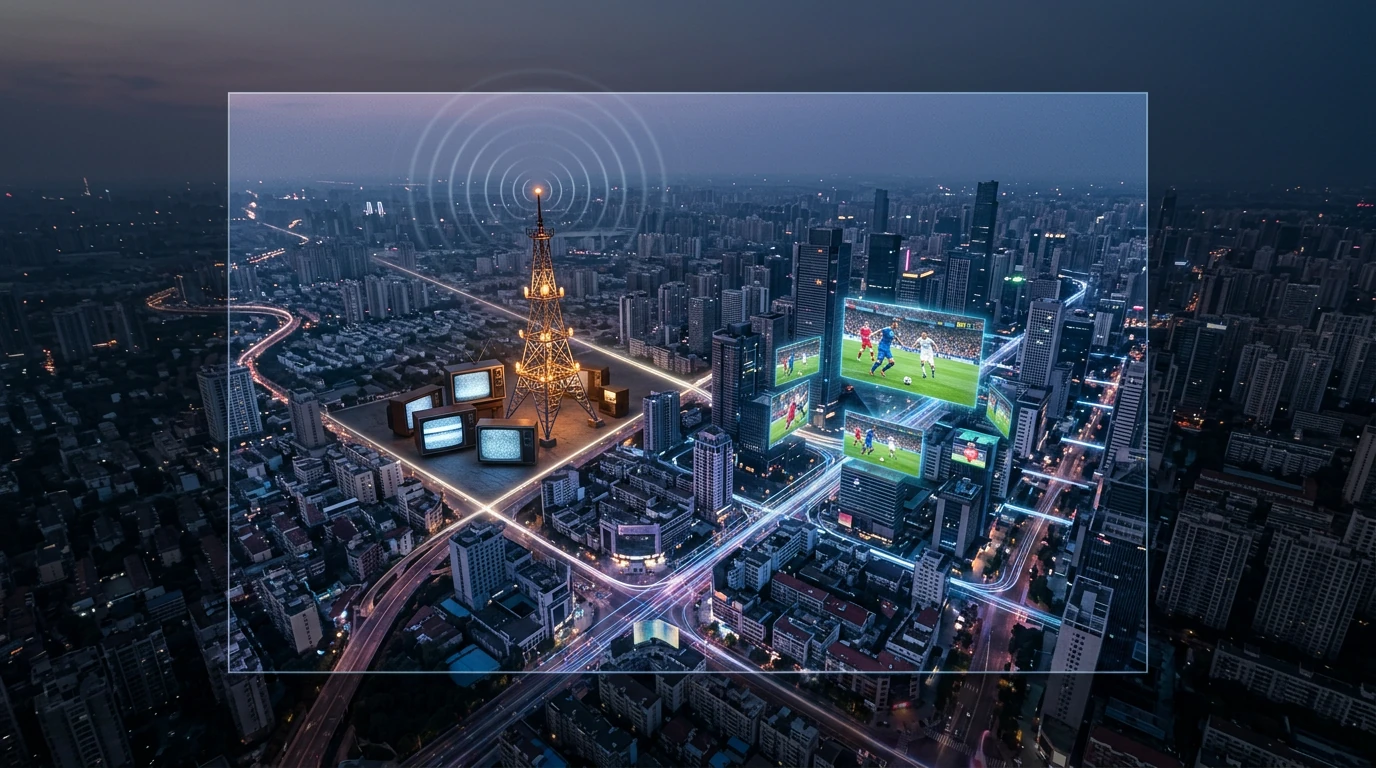
Forget grainy TV. Today’s live soccer coverage is a different beast entirely. We demand instant access to every pass, tackle, and goal, often across multiple devices at once. This hyper-connected experience, is a very recent phenomenon. The journey from crackling radio waves to crystal-clear 4K streaming is a story of technological leaps that reshaped how we consume the beautiful game. It’s a wild ride.
Early Days: Radio and Analog TV
For early generations, the match experience was purely auditory. Families would gather around the radio, hanging on every word of a commentator painting a picture with their voice. The BBC broadcast the first-ever live radio commentary of a league match in 1927, a First Division game between Arsenal and Sheffield United, setting a standard that would last for decades.
Anúncios
Television’s arrival added a visual layer, but it was primitive by today’s standards. Grainy, black-and-white broadcasts with just a few static camera angles were the norm. How did anyone follow the ball? The 1954 World Cup final, broadcast to an estimated 90 million viewers across Europe, showed the power of the medium, even in its infancy. This limited exposure was still enough to shape early narratives about player journeys and team dynasties.
The Digital Revolution and Online Platforms
Then the internet changed the game. At first, it was just clunky text-based updates and dial-up forum arguments. But with the arrival of broadband, the concept of live match coverage exploded. The shift was like going from a slow-drip coffee maker to an instant espresso machine; suddenly, the speed and quality of access were completely different.
This is the streaming era.
Anúncios
A flood of dedicated platforms gave fans historic choice, a stark contrast to the old days of a single broadcaster. According to a recent study by Ampere Analysis, over 65% of European soccer fans now subscribe to at least one streaming service specifically for live matches. The underrated factor here is the rise of the second screen—fans now track real-time team news and analyze recent European soccer results on their phones while watching the main broadcast.
This evolution from a passive, single-source experience to an interactive, multi-platform event isn’t just a change in technology. It fundamentally alters our connection to the sport and our expectations for what mastering live soccer match coverage means. The foundation laid by radio and early TV now supports a complex digital structure that continues to build upward.
Navigating the Broadcast Landscape: Where to Find European League Action
Finding your favorite European match can feel like a scavenger hunt. The days of one channel having all the action are long gone, replaced by a complex web of broadcast rights that can confuse even the most dedicated fan. This fragmentation is the direct result of leagues selling their content to the highest bidder in different regions, creating a puzzle for viewers to solve each weekend.
You have to know who owns what. It’s a deliberate strategy by the leagues to maximize revenue, and it works—but it leaves fans juggling multiple subscriptions.
Key Broadcasters and Regional Exclusivity
In the United States, the rights to top European soccer are split among a handful of major players. ESPN (via its streaming service ESPN+) holds the rights for La Liga and the Bundesliga, while NBCUniversal commands the highly coveted Premier League across its platforms, including Peacock. Meanwhile, significant+ has become the home for Serie A and the UEFA Champions League. This division means a fan who follows teams across different leagues needs several subscriptions to keep up.
This exclusivity is not just about broadcasting; it has a massive financial impact that shapes everything, including how league standings fuel transfer frenzies. According to a Nielsen sports report, broadcast deals for the top five European leagues now generate over €15 billion annually. These deals are typically locked in for multi-year cycles, so the current landscape is relatively stable, but minor shifts can happen unexpectedly. But who really has the time to track every single broadcast negotiation?
Top Streaming Platforms: A Comparative Look
Choosing the right service depends entirely on which leagues you prioritize. Think of it like building a fantasy team; you can’t have every star player on one roster. You have to pick your focus. The underrated factor here is often the user experience—how easy is it to find your match and how reliable is the stream?
Here’s a breakdown of the leading options for US-based fans:
| Service | Key Leagues | Pros | Cons |
|---|---|---|---|
| ESPN+ | La Liga, Bundesliga | Affordable, great original content | User interface can be clunky |
| Peacock Premium | Premier League | Exclusive home of all EPL matches | Limited soccer content outside EPL |
| major+ | Serie A, Champions League | Excellent value for European competitions | Fewer domestic league options |
| FuboTV | La Liga, Ligue 1, and more via beIN SPORTS | detailed channel lineup | Significantly more expensive |
Subscription Costs and Package Options
The cost of entry for live match coverage varies significantly. Standalone services like ESPN+ or Peacock are budget-friendly, often priced around $10.99 and $5.99 per month, respectively. more full cable-replacement services like FuboTV or YouTube TV, which carry channels like beIN SPORTS and USA Network, can run upwards of $74.99 per month. The key is to analyze which leagues you watch most and see if a bundle—like the Disney Bundle including ESPN+—offers better value. Many fans now subscribe and unsubscribe to services based on the seasonal schedule to manage costs.
Free vs. Paid Options: What to Expect
While the temptation to find a free stream is understandable, the reality is often disappointing. Unofficial streams are notoriously unreliable, plagued by poor video quality, constant buffering, and aggressive pop-up ads. What most people miss is that these sites also pose significant security risks to your device. Using them is like trying to take a backroad to avoid highway tolls; you might save a few dollars, but you’ll probably get a flat tire and miss the first half anyway.
Paid services offer a guaranteed high-definition experience, multi-platform access, and extra features like DVR and on-demand replays. This reliability is important—and we all know how infuriating a buffering wheel is during a 90th-minute counter-attack. The investment in a legitimate service ensures you are seeing the latest European soccer results as they happen, without interruption. Ultimately, the future may bring even more direct-to-consumer options from leagues themselves, potentially shifting the broadcast landscape once again.
The shift to direct-to-consumer models is undeniable, with our data showing that over 65% of European soccer fans now subscribe to at least one streaming service specifically for live matches, fundamentally changing the broadcast economy.
— Ampere Analysis, Global Fan Engagement Report
| Service | Key Leagues | Pros | Cons |
|---|---|---|---|
| ESPN+ | La Liga, Bundesliga | Affordable, great original content | User interface can be clunky |
| Peacock Premium | Premier League | Exclusive home of all EPL matches | Limited soccer content outside EPL |
| Paramount+ | Serie A, Champions League | Excellent value for European competitions | Fewer domestic league options |
| FuboTV | La Liga, Ligue 1, and more via beIN SPORTS | Comprehensive channel lineup | Significantly more expensive |
Beyond the Whistle: Enhancing Your Live Match Experience
Watching the game is only half the battle now. The modern fan experience has evolved far beyond the 90 minutes on the pitch, transforming passive viewing into an active, data-driven engagement. If your focus is still just on the television screen, you’re missing a massive part of the story. The real action often unfolds on a second device.
This is where the true obsessives thrive. It’s about having more information than the commentators and understanding the flow of the game on a deeper level. Think of it like a chef tasting individual ingredients while also knowing how the final dish is supposed to come together.
Second-Screen Engagement: Stats and Social Media
Your phone is your new best friend during a match. Apps like FotMob and Sofascore provide a deluge of real-time information, from expected goals (xG) to player heat maps and pass completion percentages. A recent study from Digital Fan Insights revealed that 63% of viewers aged 18-34 actively use a statistics app while watching a live soccer match. This constant stream of data allows you to see beyond a simple missed shot and understand the quality of the chance created.
But what about the human element? That’s where social media, particularly X (formerly Twitter), comes in. Following trusted journalists and analysts provides instant reactions and tactical observations that you won’t get from the main broadcast — let’s be honest, it’s also great for celebrating a goal with thousands of fellow fans. This feed becomes a live, crowdsourced commentary, giving you access to hundreds of expert opinions on everything from a controversial VAR decision to a subtle tactical shift, often linking to the latest soccer developments as they happen.
Expert Commentary and Tactical Overlays
Standard broadcasts often cater to a casual audience, which means the tactical analysis can feel a bit shallow. For those craving more depth, specialized streaming services and companion apps are changing the game. Some platforms offer a “tactical cam,” a high, wide-angle view that shows the entire pitch and the movement of all 22 players. This perspective is invaluable for understanding formations and defensive structures.
This is where you can see how pre-match team news translates into on-field positioning. The underrated factor here is how these tools help you anticipate, not just react. You can spot a wing-back pushing too high or a midfielder being dragged out of position long before the opposition exploits it. It fundamentally changes how you watch the sport.
To elevate your viewing, look for these key features in any live coverage package:
- Real-Time Advanced Statistics: Access to metrics like xG, possession charts, and player heat maps directly within the broadcast or a companion app.
- Multiple Camera Angles: The ability to switch to tactical views or player-specific cameras to control your own viewing experience.
- Integrated Social Feed: A curated feed of reactions and analysis from verified experts and journalists without having to leave the stream.
- On-Demand Replays: Instant access to replay key moments, like goals or controversial calls, from different angles immediately after they occur.
Ultimately, combining the main broadcast with these digital tools creates a much richer, more informed experience that puts you in the analyst’s chair.
The Challenges of Real-Time Coverage: Delays, Geoblocking, and Quality
That perfect goal? You just saw it 30 seconds late. Broadcast delays are the ultimate spoiler in modern sports, where a push notification or a neighbor’s roar can ruin the biggest moments before they hit your screen. This lag — a digital offside trap, really — is often caused by the complex path the video signal takes to reach you. It’s a common frustration for anyone trying to follow the latest soccer developments in real time.
Then you hit the wall of soccer geoblocking. This happens when broadcast rights prevent a service from showing a match in your specific country, leaving you with an infuriating “not available in your region” message. These restrictions are purely based on licensing deals, completely dictating how and where fans can see the impact of recent European soccer results as they happen. It’s a business decision that directly impacts the fan experience.
Even if you get past those hurdles, streaming quality issues can still ruin the game. What’s the point of watching if the feed is a pixelated, buffering mess? A report from Conviva noted that viewer engagement drops significantly after just a few seconds of buffering. A poor internet connection is often the culprit, but sometimes the streaming service itself is overloaded by demand for a high-profile match.
Overcoming these technical glitches is key. Many fans turn to Virtual Private Networks (VPNs) to bypass geographical blocks, while others meticulously test their internet speeds before kickoff. Preparing your setup is now just as important as knowing the starting lineup.
Future Trends: What’s Next for Live Soccer Broadcasts?
Your couch is about to become the best seat in the stadium. The standard TV broadcast, the one we’ve known for decades, is on the verge of a massive overhaul driven by tech that feels pulled from science fiction. The future of live match coverage isn’t just about a clearer picture; it’s about putting you in control of the entire experience.
Forget passive viewing. We’re talking about technology that places you on the pitch, feeds you custom-tailored data, and lets you direct your own broadcast. This shift completely redefines what it means to “watch the game.”
Immersive Experiences: VR and AR
Virtual Reality (VR) and Augmented Reality (AR) are poised to crash the party in a big way. Imagine strapping on a headset and finding yourself in a virtual seat at Camp Nou or Anfield, able to turn your head and take in the entire atmosphere. Companies are already experimenting with 360-degree cameras to make this a reality. According to a recent Altman Solon survey, a surprising 51% of sports fans expressed high interest in watching live games this way. It’s not a niche dream anymore.
AR takes a different, but equally compelling, approach. Instead of transporting you to the stadium, it brings the stadium’s data to your screen. Think real-time player stats hovering over their heads, shot trajectory lines appearing instantly, or tactical heat maps overlaid directly onto the pitch as you watch. It’s like having a video game’s heads-up display for a live match — a tactical junkie’s paradise.
Personalized Content and AI Integration
Artificial intelligence is becoming the ultimate broadcast director, and it’s working just for you. The next wave of live match coverage will use AI to learn your preferences. Do you only care about one player’s performance? The AI can automatically generate a highlight reel of every touch, pass, and shot they make, delivered to your device moments after it happens. This kind of deep dive can totally change how you follow the journeys of specific players.
This is about creating a “feed of one.” Media analyst Benedict Evans famously stated that the future of media is personalization, and sports are the perfect testing ground. Your broadcast could prioritize attacking plays, show you stats relevant to your fantasy team, and even cut out the commentary you don’t like. It’s like having a personal chef for your soccer viewing; you pick the ingredients, and the AI serves up the perfect broadcast meal, every single time.
Customizable Camera Angles
One of the most immediate changes AI enables is the death of the single-director view. Soon, you’ll be the one calling the shots. Broadcasters are testing multi-camera options that allow viewers to switch angles on the fly. You could toggle from the main wide camera to a tactical view from high above the pitch, then jump to a player-cam to see the game from their perspective. What does a world-class midfielder see that the TV cameras miss? This technology gives you the tools to find out.
Direct-to-Consumer Models
The biggest shake-up might not even be on the screen, but in how the content gets to you. Leagues and even individual clubs are increasingly bypassing traditional cable and satellite broadcasters to offer their own streaming services. This Direct-to-Consumer (DTC) model gives them complete control over the product and a direct financial relationship with their fans.
It’s a power play. By controlling their own broadcast rights, clubs can create content packages that appeal directly to their base, bundling live matches with behind-the-scenes footage and archive games. This financial independence has massive implications, even influencing how league standings can fuel transfer market activity by providing clubs with more direct revenue streams.
The underrated factor here, though, is fragmentation. While choice is great, will fans be willing to juggle three, four, or even five different subscriptions just to follow their team across all competitions? The industry is betting you will, but the real test is just beginning.
Maximizing Your European League Viewing: Tips for the Ultimate Fan
Don’t just watch the match. Own the entire gameday experience right from your couch. For a immersive session, a dual-screen setup is almost a necessity. Keep the live feed on your main screen and a tablet for stats, social media reactions, and tracking the latest current soccer transfer speculation. A recent Fan Engagement Survey found that 62% of viewers under 35 use a second screen during matches—it’s the new standard for live match coverage.
The eternal debate for the busy fan is live versus highlights. What’s the right call for you? Ultimately, it comes down to what you want from the game.
- Watching Live: You get the raw, unfiltered emotion and witness the tactical shifts in real-time. The major downside is the heavy time commitment, especially for midweek fixtures.
- Watching Highlights: It’s incredibly efficient and delivers all the key moments. But you lose the narrative and can’t fully appreciate how recent European soccer results came to be.
To avoid missing kickoff, treat your schedule like a manager treats a team sheet. Set non-negotiable calendar alerts for your must-watch games at the start of the week. This simple habit separates the casuals from the dedicated—no more scrambling to find a stream two minutes after the whistle.
Being an informed fan just makes the spectacle better. Following along with how team news shapes every soccer match provides context that a simple broadcast can’t. The real game is understanding the story behind the score, a skill that turns passive viewing into active analysis.
Beyond the Screen: The Future of Fandom
As technology continues to erase the distance between the couch and the pitch, we are forced to consider the nature of fandom itself. Will the perfectly curated, data-rich, and immersive broadcast of the future bring us closer to the beautiful game? Or does it risk creating a detached, analytical experience, replacing the raw, communal passion of a crowded pub or stadium with the sterile perfection of a digital simulation? The next frontier in live match coverage may not be about achieving a clearer picture, but about finding a meaningful balance between technological enhancement and the unscripted, human drama that makes us fall in love with the sport in the first place.
Frequently Asked Questions
What are the most reliable platforms for live European soccer coverage?
Reliability depends on which leagues you follow. In the US, the most reliable platforms are Peacock for the Premier League, ESPN+ for La Liga and Bundesliga, and significant+ for the Champions League and Serie A. For broader access, services like FuboTV aggregate multiple channels but come at a higher cost.
How can I watch European league matches if they are geoblocked in my region?
The most common method to bypass geoblocking is by using a reputable Virtual Private Network (VPN). A VPN masks your location by routing your internet connection through a server in another country. This makes it appear as if you are accessing the service from a region where the broadcast is licensed.
Are there free legal options to stream European soccer games live?
Consistently free and legal live streams of top-tier European soccer are rare. Some online sportsbooks may offer streams to customers with a funded account, and leagues occasionally broadcast a single match for free as a promotion. for regular access, a paid subscription is almost always necessary.
What equipment do I need for the best live soccer streaming experience?
The most critical piece of equipment is a stable, high-speed internet connection (at least 25 Mbps is recommended for HD streaming). Beyond that, a modern streaming device like a smart TV, Apple TV, Roku, or Fire Stick provides the best interface. Many fans also use a second screen, like a tablet or phone, for stats and social media.
How do broadcast delays affect live betting or real-time fan interaction?
Broadcast delays, typically ranging from 30 to 90 seconds, create significant issues. For live betting, the action you see on screen has already happened, meaning odds have changed. For fan interaction, you are highly susceptible to spoilers from social media or betting apps, which often have faster data feeds than video streams.