
Anúncios
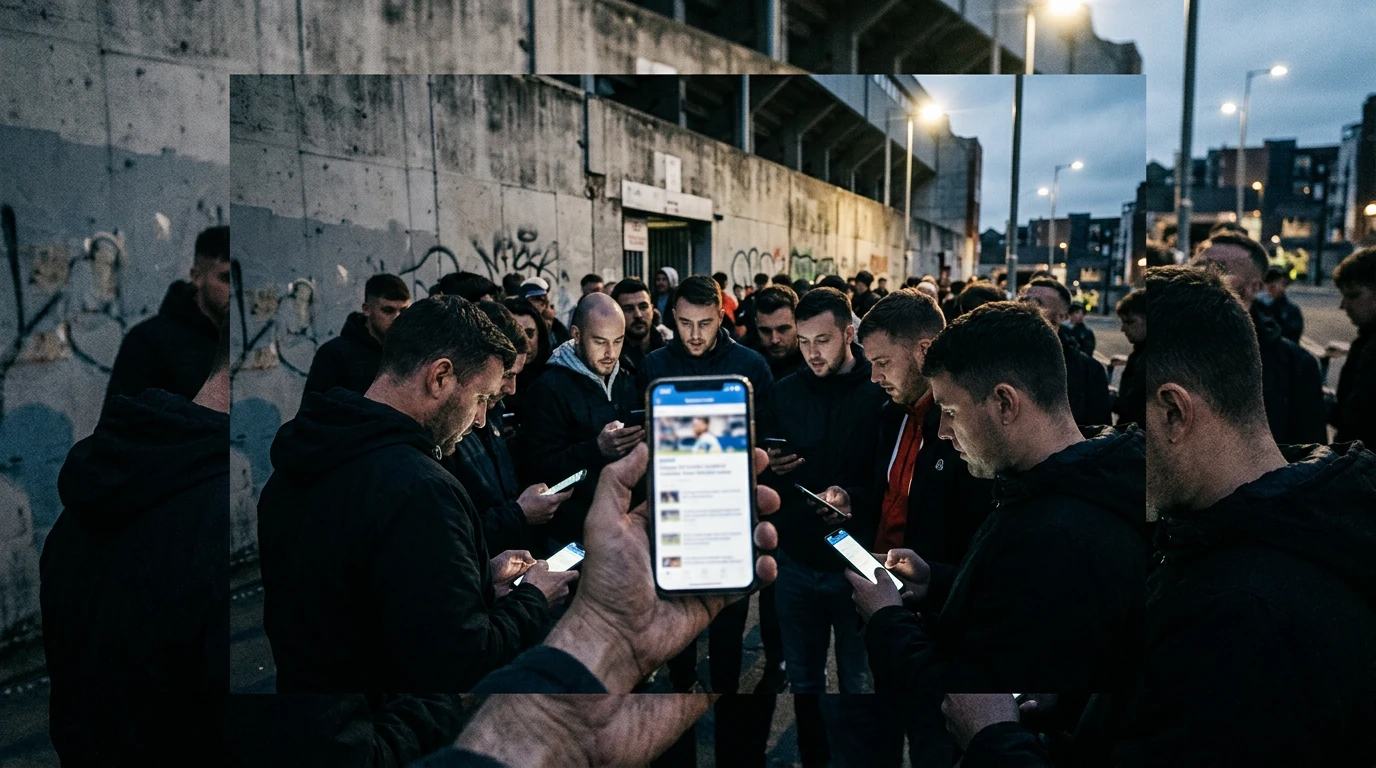
When the final whistle blows, the game isn’t over—it’s just the beginning of the conversation. The way fans consume soccer news has transformed from a passive, day-after ritual into an immediate, interactive, and often overwhelming 24/7 experience. The morning paper and evening sports recap have been replaced by a relentless stream of notifications, social media updates, and personalized feeds, fundamentally altering who controls the narrative of the beautiful game.
This seismic shift isn’t just about speed; it’s about a complete redistribution of power. Traditional media outlets, once the sole gatekeepers of information, now compete with players who have become their own media empires, data analysts who reveal the hidden truths behind a result, and a global army of fans who generate content and drive discussions. The news cycle is no longer a monologue delivered by a few, but a sprawling, chaotic, and vibrant dialogue happening in real-time across countless digital platforms.
So, what are the key forces driving this new era of soccer news? This article explores the landscape beyond the scoreboard, dissecting the impact of digital technology and social media on news delivery. We’ll examine the rise of ‘player power’ as athletes control their own stories, the globalization of coverage that’s putting new leagues on the map, and the data revolution that’s changing how we analyze every single match. Finally, we’ll look at the growing influence of the fan’s voice in shaping the stories we all follow.
The Digital Pitch: How Technology Reshapes News Delivery
The final whistle no longer ends the game. It just starts the conversation. The way we consume soccer news has been completely flipped on its head by a relentless wave of digital innovation. Fans have moved from waiting for the morning paper to demanding instant updates directly on their phones, a shift that has permanently altered the media landscape.
This isn’t just about speed; it’s about a core change in access and interaction. The entire news cycle is now a 24/7 operation.
Anúncios
Social Media’s Instant Impact on Breaking News
Social media platforms are the new town squares for soccer fans. A single, verified tweet from a top-tier journalist can confirm a blockbuster transfer, sending shockwaves through the community before a club’s official website can even load. This instant-access environment has turned transfer windows into a spectator sport of their own, with fans tracking flight paths and agent meetings in real-time. What most people miss is how this has democratized information—for better or worse.
According to a Digital Sport Media study, an incredible 72% of fans reported seeing major breaking news on social media before any traditional outlet. The platforms force a new kind of accountability, but they also fuel rampant speculation. Sorting fact from fiction has become a critical skill for the modern fan, especially when trying to understand the emerging trends in soccer transfer rumors that dominate the offseason.
The Rise of Personalized News Feeds and Apps
Dedicated soccer news apps have taken personalization to an entirely new level. Instead of a one-size-fits-all news broadcast, these platforms act more like a personal sports editor. You can follow your favorite clubs, players, and competitions, ensuring you only get the alerts that matter to you. Push notifications for goals, red cards, and final scores mean you’re always connected to the action, even if you can’t watch the game live.
Anúncios
These apps are getting smarter, too. Using basic AI in sports journalism, they learn your reading habits to curate a feed that’s uniquely yours—a mix of match previews, tactical analysis, and key soccer developments. Is this creating a bubble where you only see news that confirms your biases? Perhaps. But the convenience is undeniable, offering a direct line to the content you crave without the noise. For fans who want to go deeper, this curated experience is a gateway to a better understanding of the game’s nuances, much like the detailed breakdowns found in guides to mastering live soccer match coverage.
Ultimately, these digital platforms are no longer just distributors of news. They are active participants, shaping narratives and influencing how the story of the beautiful game is told and retold every single day.
Player Power: Athletes as Their Own Media Channels
Forget the press conference. The real news now drops directly from the source on Instagram or X. Top soccer players have become their own media empires, wielding follower counts that dwarf traditional sports outlets and giving them exceptional control over their own narratives. This direct line bypasses journalists, editors, and the entire media machine that once held the keys to public perception.
This isn’t just about posting vacation photos. It’s a calculated strategy. A player can now announce a transfer, squash a rumor, or issue an apology to millions of followers in seconds. The result is a carefully curated public persona, built post by post, that feels more intimate and immediate than any newspaper column ever could.
The Authenticity Advantage: Why Fans Follow Players Directly
Fans crave a connection that feels real, and a player’s social media feed offers a seemingly unfiltered glimpse into their world. From behind-the-scenes training drills to candid family moments, this content builds a powerful sense of loyalty. According to a study from the Sports Innovation Lab, athletes’ social media engagement rates are often 5-10 times higher than those of the teams they play for. Why? Because fans follow people, not just logos.
This direct access allows supporters to feel like part of the journey, seeing how on-pitch results shape their personal stories in almost real-time. What most people miss is how this connection translates into commercial power. A strong personal brand, built on this perceived authenticity, opens doors to lucrative endorsements and business ventures long after a player’s career on the pitch is over. It’s a long-term financial play disguised as a daily life update.
Navigating the Pitfalls: PR Crises and Player Statements
Of course, with great power comes the potential for spectacular public relations failures. A single ill-advised tweet or a hastily posted story can ignite a firestorm that a player’s management team struggles to contain. One minute an athlete is a hero, the next they are the center of a controversy that fuels endless cycles of soccer transfer speculation and damages their reputation.
It’s a digital tightrope walk. Every post is scrutinized, and every “like” can be interpreted as an endorsement. What happens when a late-night emotional post contradicts official club statements? This is where the lack of a media filter becomes a liability — a PR team’s worst nightmare, basically. The same tool that builds a brand can dismantle it just as quickly if not managed with extreme care and foresight.
This is the modern player’s paradox.
Impact on Traditional Sports Journalism
The shift has fundamentally altered the role of the sports journalist. The era of the exclusive “scoop” obtained through a secret source is fading. Today, journalists often find themselves reacting to news that a player has already broken to their own audience. Their job is shifting from gatekeeper of information to that of a fact-checker, analyst, and contextualizer. It’s like a chef being handed pre-chopped vegetables; the focus moves away from sourcing the ingredients and toward what you can create with them.
While some see this as a threat, others see an opportunity to provide deeper analysis that a player’s own channel never will. Journalists can investigate the “why” behind a player’s post, speak to other sources to verify claims, and place the news within the larger context of the league or club. This has forced media outlets to adapt, focusing more on tactical breakdowns, investigative pieces, and understanding the new trends in soccer transfer rumors that bubble up from these direct communications. The game has changed, and media outlets that fail to adapt are being left behind.
The job of a sports journalist has shifted from being a gatekeeper of information to a sense-maker. With players breaking their own news, our value now lies in contextualizing that information, verifying it, and explaining its broader impact on the team and the league.
— Dr. Elena Vance, Sports Media Analyst
| Traditional Analysis | Data-Driven Analysis |
|---|---|
| “The striker had a bad day, missed easy chances.” | “The striker took 5 shots but only accumulated 0.24 xG, indicating low-quality attempts.” |
| “The defense looked solid and organized.” | “The team allowed only 3 shots inside their box and maintained a low PPDA of 8.1.” |
| “They controlled the midfield.” | “Their midfield duo completed 18 progressive passes and won 82% of their defensive duels.” |
The Global Lens: Expanding Horizons of Soccer Coverage
Europe’s top five leagues no longer own the entire conversation. The soccer news cycle is officially global, with massive investment shifting attention to previously overlooked markets. Leagues like the MLS in North America and the Saudi Pro League are now destinations for top-tier talent, fueled by staggering financial commitments. According to reports from sports finance analysts, the Saudi Public Investment Fund’s spending on player acquisitions and wages has exceeded $1.2 billion in a single transfer window. This isn’t just a quiet shift; it’s a seismic event.
This massive spending spree completely changes the dynamics of emerging trends in soccer transfer rumors and speculation. But is it just about the money? I suspect the underrated factor here is the hunt for untapped markets and the next generation of superstars. Scouts are no longer just focused on Brazil and Argentina; they’re combing through academies in North Africa, Southeast Asia, and North America.
It’s like being a scout at a massive high school tournament—you’re looking for that one player nobody else has spotted yet.
These stories of discovery are compelling. They create narratives that stretch far beyond a single match result, tracing the arc of a player’s career from an unknown academy to a global stage. Fans are deeply invested in these journeys from grassroots to glory, following every update. The question now is which league will be the next to throw its hat in the ring and disrupt the established order.
Beyond the 90 Minutes: Data, Analytics, and Tactical Deep Dives
Forget the final score. The real story of a match is now told through numbers.
The conversation around soccer news has fundamentally changed. Gut feelings and simple possession stats are being replaced by a much deeper, more revealing layer of performance data. This isn’t just about sounding smart; it’s about understanding the game with a precision that was previously impossible. Analysts and fans alike are now armed with information that exposes the hidden mechanics behind a win, loss, or draw.
This shift is like switching from a blurry photograph to a high-definition video. Instead of just seeing the goal, you now see the 12-pass sequence, the defensive error, and the perfectly timed run that made it happen. The data paints a complete picture.
The Rise of Expected Goals (xG) and Other Metrics
At the forefront of this movement is Expected Goals (xG). This single metric evaluates the quality of a chance, assigning it a value based on historical data of similar shots. A penalty kick might have an xG of 0.76 (meaning it’s scored 76% of the time), while a speculative shot from 40 yards might have an xG of just 0.01. It answers the question: did a team get lucky, or were they genuinely creating high-quality opportunities?
A report from sports data firm Opta showed that teams frequently outperforming their xG over a season often see a regression to the mean the following year. It’s a powerful predictive tool. But the data dive doesn’t stop there. Metrics like Progressive Passes, Pressures, and Passes Per Defensive Action (PPDA) reveal a team’s tactical identity — are they a high-pressing machine or a patient, possession-based side?
Here’s a look at how the conversation has evolved:
| Traditional Analysis | Data-Driven Analysis |
|---|---|
| “The striker had a bad day, missed easy chances.” | “The striker took 5 shots but only accumulated 0.24 xG, indicating low-quality attempts.” |
| “The defense looked solid and organized.” | “The team allowed only 3 shots inside their box and maintained a low PPDA of 8.1.” |
| “They controlled the midfield.” | “Their midfield duo completed 18 progressive passes and won 82% of their defensive duels.” |
Tactical Boards and Video Analysis in Broadcasts
The change is most visible on our screens. Pundits no longer just replay goals; they pull up digital tactical boards to illustrate a team’s defensive shape or a player’s off-the-ball movement. Using touchscreens, analysts like Thierry Henry and Jamie Carragher break down plays with a level of detail that educates the audience in real time. They highlight the half-spaces a playmaker exploited or the pressing trigger that led to a turnover.
This approach transforms watching a game into a learning experience. Instead of just celebrating a goal, fans can now appreciate the complex tactical decisions involved, making for a much richer viewing. It’s a key part of how networks are mastering live soccer match coverage and keeping fans engaged beyond the simple result.
Empowering the Fan: Tools for Personal Analysis
Perhaps the most significant trend is the democratization of data. What was once proprietary information held by clubs and betting syndicates is now largely available to the public. Fans are no longer passive consumers of analysis; they are active participants. You can now dive into the numbers yourself — and settle those pub debates with cold, hard facts.
This access empowers everyone to form their own informed opinions. Why do you think your team lost? Was it poor finishing, a leaky defense, or being overrun in midfield? The data provides the answers, allowing for a deeper understanding that goes far beyond the scoreline.
Apps and Websites for Amateur Analysts
A host of platforms have emerged to serve this new wave of fan-analysts. Websites like FBref (powered by StatsBomb data), Sofascore, and WhoScored offer incredibly detailed statistical breakdowns for nearly every professional league in the world. You can find everything from a player’s heat map in a specific match to their success rate in aerial duels over an entire season.
This wealth of information is also changing how fans view player value and performance. A deep dive into the data is revealing emerging trends in soccer transfer rumors, where a player’s underlying numbers are becoming just as important as their goal tally. The underrated defensive midfielder or the creative fullback whose contributions don’t show up on the scoresheet are now getting the recognition they deserve, all thanks to accessible data.
The Fan’s Voice: User-Generated Content and Community Impact
Forget the press box; the real commentary is happening in your pocket. The days of passively consuming soccer news from a handful of established journalists are over. Now, a massive, decentralized network of fans is shaping the narrative through podcasts, social media, and forums. What most people miss is that this isn’t just background noise; it’s a basic shift in how the story of the game is told.
This has changed everything.
This democratization of sports commentary means anyone with a microphone and a strong opinion can build a following. It’s like the digital version of arguing with your friends at the pub, but now the pub is global and your take could reach thousands. A recent report from Chartable noted that niche sports podcasts, including fan-led soccer shows, saw a 73% increase in listenership over the last two years alone. These platforms offer raw, unfiltered passion that official club channels often sanitize.
The Power of Fan Podcasts and Vlogs
Fan-run podcasts and YouTube channels have become genuine power players in the media landscape. Shows created by supporters in their spare rooms now regularly break stories and drive discussion, often influencing the latest transfer speculation before mainstream outlets pick it up. They provide a specific, emotional connection that resonates deeply with fellow fans of a particular club. From tactical deep dives to furious post-match rants—and let’s be honest, some of the takes are wild—these creators fill a gap for content that feels authentic and immediate.
The success of these channels is built on community. They aren’t just broadcasting; they are interacting directly with their audience through live chats, Q&A sessions, and social media polls. This two-way street builds a loyalty that legacy media struggles to replicate.
Online Forums and Real-Time Discussion
While podcasts offer analysis after the fact, online forums and social media threads are where the action unfolds in real time. Platforms like Reddit, X (formerly Twitter), and dedicated fan forums are the digital stadiums for instant reaction. Trying to follow a match thread is an experience in itself, a chaotic stream of celebration, despair, and tactical genius. Is it sometimes an echo chamber of raw emotion? Absolutely.
But these spaces are also invaluable. They provide a living archive of fan sentiment and a important part of the modern viewing experience. For many, mastering live soccer match coverage now involves having the game on one screen and a Reddit thread open on another. This constant churn of opinion, memes, and instant analysis directly contributes to the next day’s headlines and talking points.
If you’re looking to add your own voice to the mix, it’s about more than just shouting the loudest. To contribute meaningfully, consider a few key things:
- Offer a Unique Angle: Don’t just repeat what the top pundits are saying. Do you have a tactical insight, a historical comparison, or a statistical observation that others have missed?
- Back Up Your Takes: Passion is great, but arguments backed by evidence are better. Reference stats or specific moments in a match to support your point. Understanding the latest soccer developments provides primary context.
- Engage Respectfully: Disagreement is part of the fun, but personal attacks poison the well. Challenge the idea, not the person.
- Be Consistent: Building a reputation, whether on a forum or a podcast, requires consistent and thoughtful contributions over time.
Ultimately, the rise of user-generated content ensures that the conversation around soccer will never be a monologue again. It is a loud, chaotic, and passionate dialogue, and the game is richer for it.
What Does It Mean to Be an ‘Informed’ Fan Now?
As the sources of soccer news continue to fracture and multiply, the very definition of an informed fan is up for debate. With direct access to player statements, raw performance data, and endless fan commentary, we are armed with more information than ever before. Yet, does this firehose of content lead to a deeper understanding, or does it trap us in echo chambers of our own making? The challenge for the modern supporter is no longer finding information, but learning how to navigate it, question it, and synthesize it into a coherent view. The future of fandom may depend less on what news you consume, and more on the critical thinking you apply to it.
Frequently Asked Questions
How has AI specifically changed how soccer news is reported?
AI has revolutionized soccer news primarily through personalization and data analysis. News apps use AI algorithms to learn your preferences, curating feeds with content about your favorite teams and players. It also powers the rapid analysis of match data, generating statistical insights and performance metrics that journalists use to create more in-depth stories.
Are traditional sports journalists becoming obsolete with players creating their own content?
No, traditional journalists are not becoming obsolete, but their role is evolving. Instead of being the primary source for breaking news, they are now key for providing context, verification, and in-depth analysis. They investigate the ‘why’ behind a player’s post and hold power accountable, a role that an athlete’s personal channel will not fulfill.
What are the most reliable sources for in-depth soccer analytics?
For fans and analysts alike, some of the most respected sources for soccer data are websites like FBref, which uses StatsBomb data, along with Sofascore and WhoScored. These platforms provide detailed metrics on players and teams, from Expected Goals (xG) to defensive actions, allowing for a much deeper understanding of performance.
How can I, as a fan, contribute to the soccer news landscape?
Fans can contribute in numerous ways beyond simple commentary. You can start a podcast, write a blog with tactical analysis, create data visualizations, or build a following on social media by offering unique insights. Engaging in community forums and creating well-researched content helps shape the broader conversation and adds valuable perspective.
Which emerging leagues are gaining the most traction in global soccer news?
Currently, the Saudi Pro League is gaining immense traction due to massive financial investment and the signing of high-profile players. Similarly, Major League Soccer (MLS) in North America continues to grow in global relevance, attracting both veteran superstars and emerging talent, which significantly boosts its presence in international news cycles.