Anúncios
The familiar ritual of settling in for a 90-minute soccer match is undergoing a radical transformation. For decades, the experience was universal and passive: a single broadcast feed dictated by a director in a remote truck. That era is definitively over. Today, technology is dismantling the traditional broadcast, handing control over to the viewer and creating a more fragmented, personalized, and interactive way to consume the beautiful game. The screen you watch is no longer just a window; it’s a dashboard.
This shift isn’t driven by a single innovation but by a convergence of powerful forces. Fans, particularly younger demographics raised on interactive digital media, now demand more than just a passive viewing experience. They want data, control, and social connection. Simultaneously, the maturation of technologies like artificial intelligence, augmented reality, and high-speed cloud computing has provided the tools to meet this demand, turning conceptual ideas into tangible features available on our phones and streaming devices.
So, what does the future of the sideline actually look like from your living room? This article explores the key innovations reshaping live match coverage. We will delve into the rise of AI-driven commentary and real-time analytics that provide extraordinary tactical depth. We’ll journey into immersive virtual and augmented reality experiences that place you inside the stadium. Finally, we’ll examine how the dominance of short-form content and social media is forcing broadcasters to rethink the very nature of a ‘live’ event, turning every match into a thousand shareable moments.
Beyond the Broadcast: New Avenues for Fan Engagement
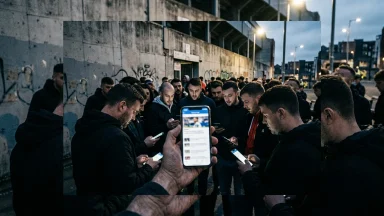
The 90-minute TV broadcast is no longer the main event. For a growing legion of fans, the real action happens on a second screen, where the passive experience of watching a game transforms into an active, engaging session. This isn’t just a niche habit; a Two Circles report found that second-screen engagement during live matches has surged by 67% in recent seasons. Fans aren’t just watching; they’re participating. This shift is fundamentally changing the nature of live match coverage.
Interactive Overlays and Real-Time Polls
Modern streaming apps are layering data and interactive elements directly onto the live feed. During a match, you can now access real-time player stats, heat maps, and even expected goals (xG) without ever looking away from the play. Broadcasters are handing the keys to the audience, running instant polls on everything from who should take the next penalty to who deserves Man of the Match. What most people miss is how this shapes the post-game narrative before the final whistle even blows. Think your tactical calls are better than the manager’s? Some platforms now let you vote on potential substitutions, creating a massive, real-time focus group that clubs and media outlets can’t ignore. This level of interaction turns a simple viewing into a competitive game in itself, making the process of understanding soccer results a much more hands-on affair. It’s a completely different world from simply waiting for the highlights.
Anúncios
Personalized Feeds and Multi-Angle Views
The one-size-fits-all broadcast is being replaced by a personalized, à la carte menu of viewing options. Apps from major leagues and broadcasters now offer multi-angle views, allowing you to switch from the main camera to a tactical “manager’s view” or a sky-cam perspective on the fly. You are now your own broadcast director. The most popular feature is the “Player Cam.” Fans can choose to follow a single star for the entire match, watching their every run, reaction, and off-the-ball movement — details often missed by traditional coverage. This deep focus on individual performance is reshaping everything, including how evolving match report narratives are constructed. Instead of just the goalscorer, the analysis can now center on the midfielder who made the notable, unseen run. This personalization ensures that every fan can create their own unique story of the game.
The Rise of AI and Data Analytics in Live Commentary
Human commentators are on notice. The familiar voices of the game are now competing with algorithms that can analyze a match faster than any person ever could. This isn’t just about flashing possession stats on the screen anymore; artificial intelligence is fundamentally changing live match coverage by providing a depth of analysis that was once the stuff of science fiction. The global sports analytics market is projected to grow significantly, with a report from Grand View Research highlighting an expected compound annual growth rate of over 20%, showing just how much money is pouring into this space.
This technological shift is creating a new kind of broadcast, one where data dictates much of the narrative. Forget waiting for the halftime show for a tactical breakdown. AI is doing it on the fly.
Anúncios
Automated Highlight Generation
One of the most immediate impacts of AI is the instant creation of highlights. technical algorithms now monitor the live feed, identifying key moments—goals, near misses, incredible saves, or controversial fouls—and clipping them for immediate distribution on social media and streaming apps. The system logs spikes in crowd noise, changes in player speed, and specific game events to determine what qualifies as a highlight. It’s brutally efficient.
This means fans who step away for a moment (we’ve all missed a goal while grabbing a drink) can get a personalized replay sent to their phone almost instantly. It’s a far cry from the old days of relying on a producer in a truck to manually cue up the best action. The AI acts like a digital producer with thousands of eyes, ensuring nothing gets missed and delivering it directly to the viewer’s device.
Real-Time Player Performance Metrics
While highlights grab attention, the real major shift is the depth of real-time player metrics. We’ve moved far beyond simple pass completion percentages. Today’s data-driven insights, powered by companies like StatsBomb and Opta, track every player’s movement, calculating their total distance covered, top speed, and even the number of high-intensity sprints. This data gives a far more complete picture of a player’s contribution than just what the ball is doing. You begin to see the evolving narratives of match reports in real time.
Advanced metrics like Expected Goals (xG), Expected Assists (xA), and defensive pressure maps are now common. Commentators can instantly see that a striker’s shot, while missed, had a 0.45 xG—meaning a similar shot would be scored 45% of the time. What most people miss is how this changes tactical discussions. Is a player wasteful, or are they just consistently getting into high-quality scoring positions? This data provides the answer.
Predictive Models for Game Outcomes
Perhaps the most provocative development is the use of predictive analytics during a live match. AI models can now calculate the probability of a team winning, drawing, or losing, with those percentages fluctuating with every pass, tackle, and shot. Some broadcasts are experimenting with showing a “goal probability” percentage for each attack as it builds. It adds a layer of statistical tension to the game.
But does knowing a team’s chance of winning just dropped from 55% to 32% after conceding a goal enhance the experience or strip away the romance? It’s a debate raging among fans. For bettors and fantasy managers, this information is gold, offering a new way to understand the flow of soccer results. For purists, it can feel like reducing the beautiful game to a cold, hard spreadsheet.
| Feature | AI Commentary | Human Commentary |
|---|---|---|
| Pros | Instantaneous data analysis, unbiased delivery, multilingual capabilities, 24/7 availability. | Emotional connection, storytelling, ability to read the “feel” of the game, contextual historical knowledge. |
| Cons | Lacks emotion and passion, can’t interpret off-the-ball narratives, may sound repetitive or robotic. | Prone to personal bias, can miss statistical nuances, subject to human error, slower analysis. |
Ethical Considerations of AI in Sports
The integration of AI isn’t without its problems. A major concern is the potential displacement of human jobs, from commentators to video analysts. As AI becomes more refined, how many roles will be deemed redundant? the constant tracking of players raises privacy questions. The data on a player’s physical decline could influence details of their next contract or transfer news, creating a hyper-critical environment based on algorithms.
The underrated factor here is the risk of sanitizing the sport. Soccer thrives on passion, debate, and even biased, emotional outbursts from commentators. An AI-driven broadcast might be perfectly accurate and infinitely detailed, but it might also be sterile and soulless. The future likely lies in a hybrid approach—using AI as a tool to assist, not replace, the human element that makes the analysis of European soccer results and other matches so compelling.
The broadcast is becoming a personalized experience. Fans can choose their camera angle, pull up player performance data, or watch with friends in a shared virtual suite—basically, no more yelling at the director to switch cameras.
— Chloe Zhang, Media Analyst
| Feature | AI Commentary | Human Commentary |
|---|---|---|
| Pros | Instantaneous data analysis, unbiased delivery, multilingual capabilities, 24/7 availability. | Emotional connection, storytelling, ability to read the “feel” of the game, contextual historical knowledge. |
| Cons | Lacks emotion and passion, can’t interpret off-the-ball narratives, may sound repetitive or robotic. | Prone to personal bias, can miss statistical nuances, subject to human error, slower analysis. |
Immersive Experiences: VR, AR, and the Metaverse
Forget your TV. The stadium is coming directly to your living room. Virtual reality (VR) and augmented reality (AR) are no longer just concepts from sci-fi movies; they are actively reshaping live match coverage. Instead of passively watching a broadcast, fans can now strap on a headset for a 360-degree view from the best seat in the house—or even from the manager’s technical area. It’s a power move for fans, turning a flat screen into a dynamic environment where understanding soccer results feels immediate and personal.
Augmented reality takes a different, but equally compelling, approach. By overlaying digital information onto the real-world view, AR brings statistics to life. Imagine watching a free-kick and instantly seeing the ball’s trajectory, speed, and spin probability appear on your screen. According to a recent survey by Sports Innovation Lab, 71% of Gen Z fans expressed a desire for more interactive data overlays during live games. It’s less like watching a game and more like having a tactical cheat sheet.
This is all about putting the fan in control. “The broadcast is becoming a personalized experience,” explains media analyst Chloe Zhang. “Fans can choose their camera angle, pull up player performance data, or watch with friends in a shared virtual suite—basically, no more yelling at the director to switch cameras.” The underrated factor here is the social component, transforming solitary viewing into a shared digital event.
Then there’s the metaverse, where clubs are building persistent virtual worlds. These digital stadiums host match-day parties, sell virtual merchandise, and even provide spaces to speculate on the latest emerging trends in soccer transfer rumors with fans globally. It completely redefines what it means to be a supporter, creating a community hub that exists far beyond the 90 minutes of play. While the technology is still maturing, the potential to create entirely new revenue streams and fan engagement models is massive.

Micro-Moments and Short-Form Content: The New Normal
Forget the 90-minute commitment. The modern fan’s currency is the ‘micro-moment’—a brilliant goal, a controversial VAR call, or a slick piece of skill, all clipped and shared in seconds. Broadcasters are no longer just covering a game; they are dissecting it into a highlight reel in real-time. This frantic pace completely reshapes live match coverage, catering to a generation raised on vertical video and infinite scrolls. It’s a total major shift.
The entire broadcast philosophy has been flipped on its head. Instead of a linear story, coverage is now a collection of shareable assets. A recent study by Digital Sport Media revealed that social media engagements for major European leagues spike by over 300% during live matches, driven almost entirely by these instant highlights. The data suggests—though not conclusively—that for many younger viewers, the social media feed is the primary viewing experience, not a second screen. The traditional broadcast is becoming the raw material for a much faster, more chaotic conversation happening elsewhere.
Optimizing for Social Media Platforms
Creating effective short-form content isn’t as simple as just clipping a goal. Each platform demands a unique approach. For Instagram Reels and TikTok, the video must be vertical, punchy, and often overlaid with trending audio or text to grab attention within the first two seconds. Twitter (now X) prioritizes speed and conversational captions, often becoming the de-facto source for immediate replay analysis that feeds directly into the modern soccer news cycle.
What most people miss is how this affects the on-air talent. Pundits and commentators are now expected to deliver soundbites perfect for clipping. Their analysis must be concise and impactful, ready to be repurposed for a completely different audience. Think of it like a chef prepping ingredients for different dishes simultaneously — the main course is the live game, but they’re also dicing up onions and peppers for quick-fire social media tacos. Is it even possible to provide deep tactical insight in a 15-second clip?
The Art of the Instant Replay
The instant replay is no longer just a tool for clarification; it’s a primary content driver. Broadcasters now use new camera angles, super slow-motion, and statistical overlays to turn a simple replay into a compelling micro-story. This focus on dissecting key moments has fundamentally changed how fans understand soccer results, transforming them from simple outcomes into a series of decisive, analyzable events.
This is where the drama gets manufactured. A broadcaster might replay a controversial tackle from five different angles, fueling debate and engagement long after the whistle. They are creating narratives on the fly, much like the constant speculation seen in the world of emerging trends in soccer transfer rumors. Every close call becomes a potential viral moment waiting to be packaged.
This relentless drive for shareable snippets ensures the game’s biggest moments ripple far beyond the final whistle, permanently altering the half-life of a single match.
Challenges and Opportunities for Broadcasters
The broadcast truck is officially on fire. For decades, networks held all the cards, but now they’re scrambling to keep up with a game that’s changing faster than a VAR decision. The challenge isn’t just about technology; it’s a basic fight for relevance in an age of infinite choice. The old playbook is obsolete.
Adapting Infrastructure for New Technologies
Upgrading broadcast infrastructure is no small feat. It’s like trying to replace the engine of a plane mid-flight. The move from standard HD to 4K, and now towards 8K and interactive AR overlays, requires massive capital investment. A study by Deloitte estimates that equipping a single top-tier stadium for full 5G-enabled broadcast capabilities can cost upwards of $8.3 million. This isn’t just about buying new cameras. It involves installing fiber networks, cloud processing centers, and specialized graphics servers.
Many broadcasters are caught in a difficult position. They see the demand for higher quality and more immersive experiences, but the return on investment isn’t always clear. What most people miss is that the latency required for real-time betting odds or player-tracking stats is incredibly low, demanding edge computing resources that simply didn’t exist in broadcast workflows a few years ago. This tech debt is a huge hurdle for legacy media companies competing with nimble digital-native platforms.
Balancing Innovation with Traditional Viewership
Here’s the real tightrope walk. How do you roll out a dozen new on-screen graphics without infuriating the lifelong fan who just wants to see the match? A 2022 Nielsen report revealed that while 41% of viewers under 35 want more interactive stats during a game, viewers over 55 found them “overly distracting.” This generational divide is a major headache for producers.
The solution isn’t to dumb down the broadcast. It’s to offer optionality.
Smart broadcasters are using layered feeds—a clean, traditional broadcast for the main channel, with interactive, data-heavy versions available on secondary streams or apps. This allows viewers to choose their own adventure. Think of it as a restaurant offering both a classic burger and a deconstructed, avant-garde version. They cater to different tastes without compromising the core product, which is a key part of the modern analysis of soccer results. The goal is personalization, not a one-size-fits-all approach that pleases no one.
Monetization in a Fragmented Landscape
The days of relying solely on 30-second ad spots and cable subscriptions are over. With audiences scattered across linear TV, streaming services, social media, and even illegal streams, creating a profitable model is a complex puzzle. Broadcasters are forced to experiment with new revenue streams, as the value of traditional ad buys diminishes in an on-demand world.
Subscription Models vs. Ad-Supported Content
The big debate is whether to put the best content behind a paywall or offer it for free with ads. Services like Peacock and major+ are betting on a hybrid “freemium” model, offering some matches for free to draw users in, while locking premium fixtures behind a subscription. According to Ampere Analysis, the average sports fan is willing to subscribe to 2.7 streaming services before hitting “subscription fatigue.” This puts immense pressure on broadcasters to prove their value.
Meanwhile, ad-supported video on demand (AVOD) is gaining traction, especially for highlights and analysis shows. Platforms like Pluto TV or Tubi are finding success by offering content for free, supported by ad revenue. This model lowers the barrier to entry for casual fans, which is primary for anyone trying to build a broad base of viewers who understand soccer news.
Leveraging Partnerships for Wider Reach
No single broadcaster can own the entire fan journey anymore. Smart media companies are forming strategic partnerships to extend their reach. This includes deals with social media platforms like TikTok and YouTube for short-form highlights, which act as powerful marketing funnels for the full live product. It also involves collaborating with sports betting companies to integrate live odds and create co-branded content—a once-taboo practice that is now mainstream.
The Apple TV+ and MLS Season Pass deal is a prime example of a tech giant completely reshaping a league’s broadcast strategy. By offering every single match with no blackouts, they created a simple, unified product for fans. This type of partnership, which combines global distribution with deep pockets, is becoming a more common feature in a landscape where emerging transfer news trends can be influenced by broadcast rights. The future isn’t about owning the audience; it’s about meeting them wherever they are.
The Trade-Off Between Data and Drama
As we integrate these powerful technologies, we stand at a crossroads. The drive for perfect data, personalized feeds, and algorithmic analysis promises a more informed and controlled viewing experience. We can dissect a player’s performance with granular detail and predict a match’s outcome with fluctuating probabilities. But does this statistical clarity come at a cost? Soccer’s enduring appeal has always been rooted in its unpredictability, its emotional narratives, and the shared, communal experience of passion and heartbreak. The ultimate question is not whether we can create a perfectly optimized, data-rich broadcast, but whether we should. As we move forward, the challenge for clubs, broadcasters, and fans alike will be to find a balance—to embrace innovation without inadvertently engineering the soul out of the sport.
Frequently Asked Questions
How is AI changing the way we watch live soccer?
AI is revolutionizing live soccer by providing real-time data overlays, such as player speed and Expected Goals (xG). It also powers automated highlight generation, instantly clipping key moments for social media and personalized replays, creating a more data-rich and immediate viewing experience.
What are the most impactful new technologies for immersive soccer viewing?
Virtual Reality (VR) and Augmented Reality (AR) are the most impactful technologies for immersive viewing. VR offers 360-degree in-stadium perspectives, while AR overlays live statistics, player tracking data, and trajectory lines directly onto your view of the game, making the experience more interactive.
Will traditional TV broadcasts of soccer matches disappear?
Traditional TV broadcasts are unlikely to disappear entirely, but their role is evolving. They are becoming the primary source material for a wider content ecosystem, integrating new technologies like AR and serving as the foundation for clips shared across social media and personalized apps.
How can fans get more personalized live match coverage?
Fans can access personalized coverage through modern streaming apps that offer features like multi-angle views, including tactical cams and sky-cams. The most popular option is the ‘Player Cam,’ which allows a viewer to follow a single player for the entire match, capturing all their movements.
What role do social media platforms play in modern live soccer coverage?
Social media platforms have become a primary venue for live soccer coverage, focusing on the distribution of ‘micro-moments.’ They thrive on instant highlights, controversial plays, and pundit soundbites, often becoming the main hub for fan discussion and real-time engagement during a match.